Japanese commercial firms as drivers of Japanese space policyby Owen Chbani
|
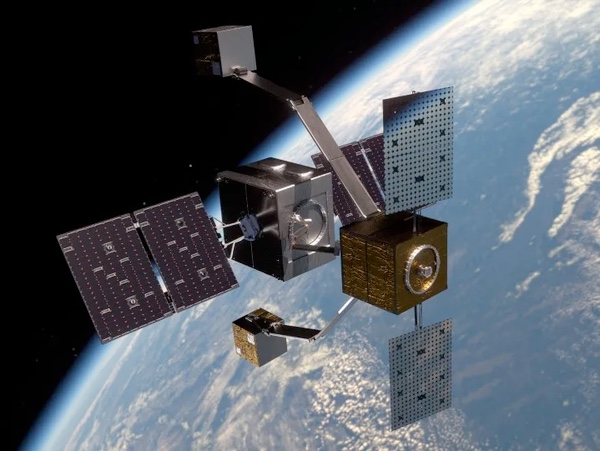
| Just as in the United States, Japan’s space industry at the turn of the 21st century was dominated by defense-industrial behemoths. Unlike the United States, however, Japan’s nascent commercial ecosystem faced much stronger headwinds. |
That period also saw Japan attempt and successfully develop an autonomous launch capability with the H-II vehicle. Previously, Japan was dependent on licensed American “black-box” technology that significantly restricted Japanese capabilities and technology transfer.[5] Japanese policymakers viewed a domestic launch vehicle as critical to independence in space, with commercialization a secondary concern. As a result, H-II per-launch costs ballooned to more than two to three times those of comparable Western rockets like Ariane, Atlas, and Delta.[6]
Just as in the United States, Japan’s space industry at the turn of the 21st century was dominated by defense-industrial behemoths, struggling for business against increasing international competition and declining defense spending. Unlike the United States, however, Japan’s nascent commercial ecosystem faced much stronger headwinds, with a less defined policy environment, unfriendly business and capital environment, as well as a much smaller domestic market. Japanese firms and policymakers must work together to clear obstacles to a successful commercial industry.
Current space policy legislation
Basic Space Law
Japan’s 2008 Basic Space Law represents the fundamental enabling piece of legislation for non-governmental space activities in Japan. Articles 4 and 16 took a proactive stance towards cultivating the activities of the private Japanese space sector. Article 16 promotes:
“the taking of taxational and financial measures and other necessary measures in order to facilitate investment by private operators in the business with regard to Space Development and Use.”[7]
This critical step acknowledged not just the utility of a government-dependent space sector, but also represented the first attempts towards building a private-sector space industry. The ‘five-pillars’ of the Basic Space Law are:
- Improving the Welfare and Safety of Daily Life
- Strengthening the International Security by Applying the Space Technology
- Performing Constructive International Roles through Space Technology
- Developing the Private Sector as the Strategic Industry in the 21st Century
- Inspiring People to Dream and Investing in the Future[8]
Additionally, the Basic Space Law aimed to expand investment in Japan beyond “rockets and satellites” or basic enabling technologies, towards a more comprehensive “utilization of space” by government and commercial actors in service of the pillars identified by the Basic Space Law. The Basic Space Law was later paired with the 2009 Basic Plan on Space Policy to send a strong demand signal to Japan’s space sector, which had “suffered from smaller governmental demand and insufficient R&D for commercialization and industrial promotion since the 1990s.”[9] The Plan identified remote sensing, human exploration, and space sustainability as areas of opportunity for Japanese industry to contribute to national goals.
Another notable pillar of the Basic Space Law was the emergence of domestic national security space applications. After the “Super 301” measures crippled the domestic satellite production industry, Japanese industry, under the Keidanren (Japanese Business Federation), advocated for the creation of a national security space sector to provide business opportunities not open to foreign competition.[10]
The 2008 Basic Space Law and 2009 Basic Plan for Space would set the tone for the rapid expansion of commercial space activities in Japan. Before the law, industrial conglomerates, mostly involved in satellite and rocket production, dominated Japan’s space industry. Today, Japan is a leader in a diverse range of space activities, including those highlighted in the Basic Plan for Space.
Space Activities Act
The 2021 Act on the Promotion of Business Activities for the Exploration and Development of Space Resources[11] is basic enabling legislation that implements Japan’s treaty-based obligations to commercial users for both commercial and civil users. The two fundamental activities it establishes licensing frameworks for are space launch and satellite control. The Japanese government aims to introduce a revised Space Activities Act to better capture novel commercial space activities not currently covered by the Act.[12] Prime Minister Ishiba pointed to innovations by private companies as driving the revision of the Act, with feedback from the companies into a standard mechanism being critical to the process.[13,14]
Satellite Remote Sensing Act
The 2016 Act on Ensuring Appropriate Handling of Satellite Remote Sensing Data[15] licenses imaging activities, as they may have national security considerations. The licensing aims to ensure that data is properly stored and prevented from being transferred inappropriately to third parties, the Act also stipulates that purchasers of remote sensing data must be accredited by the Japanese government.
Space Resources Act
The 2021 Act on the Promotion of Business Activities for the Exploration and Development of Space Resources[16] promotes the use and ownership of space resources by commercial entities. Under this law, ispace was the first company to gain a license under this Act, which entitled it to collect lunar regolith in a highly publicized sale to NASA.[17] Any activities licensed under this act must comply with international treaties Japan is a party to, and publish business plans to ensure non-interference and transparency.[18] Japan, the US, Luxembourg, and the UAE are the four countries that have passed space resources acts in line with the Artemis Accords, which states that the extraction of space resources does not constitute national appropriation under the Outer Space Treaty.[19]
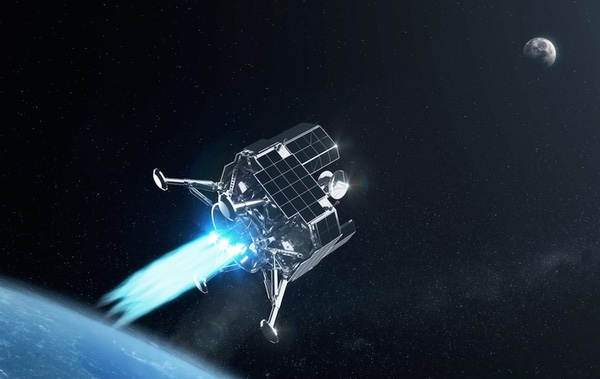 Japanese space policy has helped ispace, a company developing lunar landers and other infrastructure. (credit: ispace) |
Case studies
To illustrate how commercial firms have evolved alongside the nascent Japanese space policy framework, this article examines five Japanese firms and how Japan’s policy environment has shaped, and been shaped by, their activities. Many have US-based subsidiaries, demonstrating just how central American markets and budgets are to their businesses and underscoring the importance of the American commercial market even to international firms.
Astroscale
Astroscale is one of the largest commercial space firms in Japan with subsidiaries in the US, UK, and Europe, and is a global leader in the space servicing and debris removal market. It was founded in 2013 in Singapore (but later headquartered in Japan) by CEO Nobu Okada after he was inspired to pursue space entrepreneurship by attending conferences and understanding the threat of increasingly congested orbits.[20,21] Japan’s willingness to support the company and embrace commercial solutions, as well as the company’s ability to shape the domestic policy environment, have been critical to its success.
| Many Japanese startups have US-based subsidiaries, demonstrating just how central American markets and budgets are to their businesses and underscoring the importance of the American commercial market even to international firms. |
Its $7.7 million Series A in 2015 was in the words of Okada, “the first successful fund raise in commercial space venture in Asia,” and represented a shift towards private-led innovation.[22] Astroscale’s efforts directly support the sixth pillar of the 2009 Basic Space Plan, “Consideration of the environment,” which states that “addressing the debris problem appropriately is an urgent necessity.”
Astroscale’s second funding round in 2016 would raise $35 million from previous investors, as well as $30 million from the Innovation Network Corporation of Japan (INCJ), which was established via a public-private partnership to promote Japanese industrial policy.[23] INCJ would be able to take on more risk than traditionally conservative Japanese firms, work to promote Japanese firms in key sectors, as well as combat structural issues in Japan’s industrial economy.[24]
Astroscale would continue to grow internationally and, domestically, began to attract attention from JAXA. The agency awarded the company a Phase 1 contract under the Commercial Removal of Debris Demonstration (CRD2) program, which seeks to mature new space businesses in the field of debris removal, with the explicit goal of helping “Japanese companies [...] capture new markets.” This mandate enables the CRD2 program to employ procurement methods like firm fixed price contracts, milestone payments, and goal-oriented, rather than requirements-oriented procurement.[25] This contract has helped Astroscale develop a product maximally useful to commercial customers while fulfilling JAXA’s stated need for debris removal capabilities. Astroscale has also won the CRD2 Phase II contract, leading to an extended campaign of proximity operations with an H-II upper stage in 2024.[26]
The company has also received an approximately $47.5 million contract from the Japanese Ministry of Defense, which seeks to have the company develop a rendezvous and proximity operations demonstrator for geostationary orbit. This activity would have been impossible without the Basic Space Law enabling military space activities.
To enable these operations, the National Space Policy Secretariat published “Guidelines on a License to Operate a Spacecraft Performing On-Orbit Servicing” in 2021.[27] The Cabinet Office also maintains a transparency page that outlines current Japanese on-orbit servicing missions.[28] In 2025, the Cabinet Office announced that Japan will lead an international effort to identify the legal and procedural barriers to space debris removal.[29] Astroscale itself advocates for the creation of “clear” policies for facilitating on-orbit servicing by engaging with international and Japanese stakeholders, and has driven much of this change in Japan’s policy environment.[30,31] An Astroscale comment to the Space Policy Committee of the Cabinet Office provided comments on how the Space Activities Act could be revised to better enable on-orbit servicing activities. This standing feedback mechanism that directly absorbs industry feedback is a critical element to building a permissive policy framework that enables innovation.[32]
Synspective
Synspective is an Earth observation company developing a constellation of synthetic aperture radar (SAR) satellites for disaster monitoring, defense, and environmental monitoring.
The company currently operates seven StriX satellites and is planning a constellation of more than 30 to enable rapid revisit of sites across the globe. Synspective gives credit to the imPACT government-led innovation program with developing the fundamental underlying technology behind their satellites before the company’s founding in 2018.[33] The imPACT program supports “high-risk, high reward research” with the aim of benefitting Japanese industry and overcoming social challenges.[34]
Just a year after its founding, Synspective had already raised $100 million, followed by two other rounds also dominated by private industry and venture capital, in contrast to Astroscale’s significant public investment in early rounds. In just five years, the traditionally conservative Japanese venture capital markets had warmed up to space technology.
This was in large part thanks to the ever-growing commercial space industry on the other side of the Pacific validating the thesis of commercial space companies, but Synspective could also take advantage of a rapidly maturing policy environment that increased predictability, liability, and government programs purpose built to support commercial actors.
Synspective’s first satellite, StriX-a, was the focus of a partnership through JAXA’s Space Innovation through Partnership and Co-creation (J-SPARC), which used Synspective data in partnership with the Saga prefecture to analyze flooding impacts in the region and validate SAR performance.
The Cabinet Office and National Space Policy Secretariat have partnered with Synspective to being implementing SAR data in the work of government agencies. While the constellation hasn’t matured to the point of full utilization, support from the government acts as a key demand signal and continued evidence that SAR data can be effective in policymaking. Pathfinder data can help governments begin to understand how they can use Synspective’s data and products well before the constellation has reached full maturity.
Additionally, the company has advocated for “batch approvals” from the Cabinet Office, as their constellation has largely been frozen in design, but requires a review each time a satellite is launched. This makes changes harder, as the company will soon reach a point where it will always have a satellite in review, and it will need to produce onerous levels of documentation if changes are made in the process of approval.[35]
Synspective was also selected by the Space Strategy Fund in 2024, under the theme of “Accelerating Commercial Satellite Constellation Deployment,” which contains about $600 million of funding spread among four companies.[36] In September 2025, Synspective signed an additional ten launches with RocketLab, bringing its total to 33 satellites with launch contracts already signed. With a full constellation of SAR satellites, Synspective and Japan gain a major capability for commercial and national security applications, it has already received contracts from the JASDF, and a visit from US Space Force, Japan leadership.[37,38]
ispace
ispace was formed out of the failed Google Lunar X Prize, which sought to reward the first private company to successfully land on the Moon with a $30 million reward,[39] directly building on the Ansari X Prize, which many say initiated the commercial spaceflight era.[40] The company then began fundraising privately, securing $90 million in 2017 from INCJ, the Development Bank of Japan, and private backers. This was followed by an infusion from a 2018 billion-dollar fund established by the Abe government for supporting space startups, including a technology transfer program from JAXA, talent and investor matching programs, as well as legislative reforms in space resources and satellite servicing.[41] These proposed reforms would later become the Space Resources Act and Guidelines on Servicing.
| Unlike the commercial space relationship in the 1980s and 1990s, commercial space has evolved into a key strength of the Japan-US relationship. One key difference is that Japanese industry has largely pursued complementary capabilities to American civil and commercial capabilities. |
ispace would go on to initiate the Hakuto-R program, which has so far failed in two attempts to put a spacecraft on the surface of the Moon. Its next attempt is through its US subsidiary, ispace US, in partnership with Draper in the United States for a Commercial Lunar Payload Services contract in 2027. The company has also received $80 million from the Ministry for Economy, Trade, and Industry’s (METI) Small Business Innovation Research (SBIR) grant, to develop a 100-kilogram payload lander for the Moon. This instrument is modelled after the American SBIR program, which ironically was created to combat Japanese encroachment upon domestic American industry.[42] Much like Astroscale for on-orbit servicing, as of 2025 ispace is the only Japanese firm to have applied for a space resources license, one for each of its missions.[43] It has benefitted from the Space Strategy Fund as well, receiving a contract to build a lunar water detection satellite as a contractor for the Institute of Science, Tokyo. The firm also went public in 2023 on the TSE Growth exchange, raising over $150 million in equity since.[44,45] This is in addition to nearly $200 million in fundraising pre-IPO.
ispace has also had a large influence on Japan’s policy environment. Its existence and advocacy was critical to actualizing Japan’s Space Resources Act, which came after ispace was contracted by NASA to conduct a sale of lunar regolith. Beginning in 2016, ispace was formulating recommendations to the national Diet as it began considerations of a national Space Resources Act.[46] In a 2019 presentation to MEXT facilitated by the Society of Japanese Aerospace Corporations, ispace included requests for firm rules on space resources to enable Japanese firms to capture the nascent market.[47] In 2021, ispace applauded the passage of the act, which it said will “bring opportunities and order to commercial activities” on the Moon and elsewhere.”[48]
Yet, just a month later, ispace published a 31-page “Lunar Industry Vision” on the next steps the Japanese government should take to enable the company’s, and commercial lunar industry’s, continued growth.[49] This included seven targeted recommendations focusing on implementation of the Space Resources Act, stimulation of domestic industry, and even calling for a government-sponsored landing demonstration. This call would later be answered by METI’s $80 million 2023 contract for a 100-kilogram-class lander.
The company operates in three of the four countries that have passed space resources acts, pointing to the “chicken or egg” nature of commercial actors in shaping legislation. In Japan, ispace was able to advocate for a suitable regulatory framework, while in Luxembourg, an established space resources act was able to attract ispace EU to headquarter in Luxembourg. A partnership was established in 2017 between the SpaceResources.lu initiative and ispace EU to support the commercialization of space resources technology. Some nations may have mature space regulatory frameworks because their local industry has advocated for it, others because they wish to encourage its growth or attract already mature foreign companies.
SpaceBD and Japan LEO Shachu
JAXA’s 2017 Kibo Utilization Strategy outlined Japan’s attempts at LEO commercialization, announcing that operations on the Kibo ISS module, previously conducted directly by JAXA for a fee, would transition to private operations. JAXA aimed to have private companies expand usership as well as explore new markets.
JAXA first transitioned the deployment of satellites from the Kibo module to SpaceBD and Mitsui in 2018,[50] with the use of the external facility transitioned in 2019.[51] Later, JAXA would designate SpaceBD as the only commercial provider of rideshare opportunities on the H-IIA and H3 rockets. These attempts to extend a commercial ecosystem to LEO have been successful, with SpaceBD transferring 13 satellites to JAXA for deployment in 2024, a record.
In 2022, JAXA selected SpaceBD to formulate how commercial Kibo operations could translate into post-ISS commercial opportunities. This model demonstrates JAXA’s attempts to understand the potential for commercial business opportunities in LEO, and how they may shape its ambitions in a post-ISS world. Even American operators like Nanoracks, now Voyager, have struggled to fully utilize the ISS, and external interfaces like Bishop Airlock and SpaceBD is likely to be facing similar issues even despite its growth. National policies are still contending with this lack of a robust demand for LEO services.
Japan LEO Shachu (Japan Low Orbit Corporation), a Mitsui subsidiary founded in 2024 that is aiming to build a “Japan Module” for a future US commercial station, won Space Strategy Fund support to pursue a successor to the Kibo module and an autonomous cargo vehicle. It hopes to leverage Mitsui’s experience on commercial Kibo operations to develop, own, and operate a commercial Japan-module.[53] Japan LEO Shachu also aims to deepen the Japan-US collaboration through its business, by expressly stating it is developing an additional capability for American stations, underscoring the fact that it is not developing an independent capability. This reflects a growing recentering of space ties between the United States and Japan onto commercial entities, as both nations seek to stimulate a robust space economy.
Japanese policy and fiscal instruments to stimulate commercial industry
Space Strategy Fund
In 2023, JAXA and the Japanese government created the Space Strategy Fund (SSF) to support the nation’s space industry with over $6 billion in funding over the next decade from MEXT, METI, and MIC. The fund has three goals:[54]
- To double the size of Japan’s domestic space market from $30 billion to $60 billion by the early 2030s;
- Contribute to solving global and social issues through space utilization; and
- Strengthen fundamental knowledge and basic technologies
Thirty-eight different organizations have won awards under the first round, many among them commercial actors.[55] The SSF also sends a critical demand signal to private industry and investors through a multi-phase approach, demonstrating the Japanese government’s priorities and rewarding private investments in key technologies.
SBIR
Japan’s SBIR program supports small and medium-sized enterprises (SMEs) with maturing technologies.[56] While the SBIR program is a Cabinet Office initiative, METI and the New Energy and Industrial Technology Development Organization (NEDO) implement Phase I space-related SBIR programs, with the originating organization (usually METI, MEXT, or MIC) able to implement later phases of the grant themselves. SBIRs may mature capabilities on behalf of a specific organizational need, or aim to fill market gaps by boosting SME capabilities.
NEDO
NEDO also has several programs aimed at supporting startups and space technology. This includes the Deep Tech Startup Support program, which seeks to support startups across the green technology area, those engaged in joint international R&D projects, and fundamental technology.[57] NEDO has also supported space component ventures, in order to support Japanese industrial competitiveness on the global stage.[58]
SMRJ loans and support
The dominance of large enterprises in Japan’s business landscape, combined with a traditionally risk-averse startup financing ecosystem, has inhibited the growth of Japan’s startup sector.[59] One prominent organization that has supported several space enterprises has been SME Support Japan (SMRJ), which has a mandate to support SMEs across Japan’s business landscape. One of the most powerful instruments in its toolkit is its ability to secure 50% of loans to finance innovative SMEs, effectively increasing the risk tolerance of lending to innovative firms while backstopping risk.[60] Astroscale, ispace, Synspective, and iQPS have all taken advantage of SMRJ financed loans, allowing them to effectively scale their businesses.[61,62,63,64]
J-Startup
METI’s J-Startup program aims to encourage Japan’s startup ecosystem to address societal challenges and enable their competition on the global stage.[65] Once a company is accepted into the J-Startup program, it has access to preferential government and private sector support. This includes:
- “preferential treatment in support measures such as subsidies, and simplifying procedures”
- “Utilization of a regulatory sandbox system”
- “Handling requests related to regulations”
More than a dozen space firms are members of J-Startup, including Astroscale, Synspective, and ispace. The responsiveness of the Japanese regulatory ecosystem has been a critical facet of their success, and the J-startup program helps to institutionalize this responsiveness while helping startups’ competitiveness against existing large enterprises when competing for government funding.
K-Program
The Cabinet Office’s Key and Advanced Technology R&D through Cross Community Collaboration Program (K Program), looks to support critical R&D efforts to maintain Japan’s global competitiveness. In 2025, Astroscale was awarded about $75 million to mature refueling and life extension technologies.[66] Several other companies have received awards under sensing and communications themes.
These programs, along with commercial advocacy and ingenuity, have reshaped Japan’s space sector and led to substantial changes in Japan’s policy framework. Conscious efforts have begun to bear fruit, as demonstrated by the increasing success and globalization of Japanese commercial firms. Additionally, Japanese funding is disproportionally allocated towards satellites and exploration, receiving more than three times the funding of space transportation projects. This represents a continuation of Japanese policy, which focuses on space as a tool for societal improvement and industrial development, but also an implicit acknowledgement of Japanese firms as complementary to a maturing global commercial space ecosystem.
The emerging Japan-US commercial space alliance
“Given the increasing importance and expanding role of the private sector in exploring outer space, including to both countries’ national security, both sides committed to deepening linkages between their respective space industries, and expressed their intention to pursue a space industry network composed of Japanese and U.S. space companies interested in deepening cooperation in order to support the goals of the Japan-U.S. alliance in space.” - 2023 CompDial[67]
Unlike the commercial space relationship in the 1980s and 1990s, commercial space has evolved into a key strength of the Japan-US relationship. One key difference is that Japanese industry has largely pursued complementary capabilities to American civil and commercial capabilities. Rather than aggressively pursuing commercial launch, satellite construction, and human spaceflight markets, which are currently dominated by American firms, Japanese firms like Astroscale, Synspective, ispace, SpaceBD/JLS, and others, have shown a willingness to advance and enhance US commercial interests.
| By learning the lessons of Japan’s many successes and challenges in building a vibrant commercial sector, policymakers across the world may learn how to cultivate a domestic industry—and agile policy ecosystem—able to serve national goals. |
Especially critical is the ability for Japanese and American firms to contribute to mutual security. Synspectives’ SAR technology enables a plethora of military benefits, including all-weather imaging, radar site detection, and advanced observation techniques.[68] Astroscale US is conducting the first refueling of a US Space Force satellite in geostationary orbit.[69] American industry also has a critical role in enabling Japanese missile tracking and defense capabilities, explicitly mentioned in a 2024 joint White House statement between Biden and Kishida. Additionally, Japan’s Ministry of Defense has contracted with US firm LeoLabs to provide space situational awareness data.
From low Earth orbit to the lunar surface, the US-Japan relationship in civil space has embraced the potential of civil space. The marquee civil space partnership between the US and Japan has been the ISS, which is retiring in 2030. Replacing it is the Commercial Low Earth Orbit Destinations, or CLD, program, which hopes to have a commercially operated space station in orbit by the time ISS is deorbited.
Japanese industry has demonstrated significant interest in CLDs, with Japan LEO Shachu specifically targeting a partnership with American CLD providers. SpaceBD and Voyager Space have cooperated on the ISS, and Mitsubishi has taken an ownership stake in Starlab, a subsidiary of Voyager charged with building the Starlab space station. Mitsui, owner of Japan LEO Shachu, has secured a joint venture with Axiom Space for their CLD partnership.
Operating a commercial space station with Japanese and American modules and astronauts is a complex and expensive task that will require both governments to take on new and uncomfortable roles. By beginning to commercialize elements of Kibo operations, beginning HTV-X cargo deliveries to ISS, and funding exploratory development of a “J-module”, Japan has demonstrated a unique willingness to embrace this commercial model. This operational experience helps Japanese firms build a case to both American policymakers and commercial companies that they will be credible partners in a post-ISS world.
In 2024, Prime Minister Kishida and President Biden announced that two Japanese astronauts would be the first non-American astronauts to land on the Moon. In support of these aims, SpaceX will be delivering the Toyota Pressurized Rover to the lunar surface. In addition, ispace, Dymon, and GITAI are all Japanese firms focused on the development of lunar infrastructure. From the NASA’s Commercial Lunar Payload Services program, Human Landing System, and METI’s ispace lander contract, both nations are integrating commercially operated services into Artemis. Japanese firms provide needed services and critical early demand for American transportation services and platforms, which enable missions Japan could never achieve alone. This symbiotic civil space relationship is a critical facet of the two nation’s deepening commercial relationship.
In purely commercial terms, the rise of Japan’s commercial space industry has brought in considerable revenue for American firms. Synspective alone has 21 Electron launches contracted with Rocket Lab, over a year’s worth of dedicated launches for the US-headquartered company, with Astroscale’s ADRAS-J also launching on Electron.[70] Until HTV-X’s maiden flight, SpaceBD and Mitsui were entirely reliant on American commercial cargo capabilities to launch experiments to the ISS. SkyPerfect JSAT is the first commercial customer for SpaceX’s Starship launch vehicle. Additionally, SpaceX’s Starlink gained market access in Japan in 2022, partnering with local telecom providers to provide service, and AST SpaceMobile demonstrated the first direct-to-device video call enabled by satellite.[71] Commercial space ventures increasingly underpin exploration, security, and common prosperity between the US and Japan.
Institutionalization of cmmercial ties
The year 2023 saw the first year a “Track-1.5” dialogue between the two nations’ industries alongside the eighth civil space dialogue, an acknowledgement that commercial actors were becoming an increasingly important facet of the commercial space relationship. In 2024, the second Track 1.5 dialogue discussed topics including “market access, regulatory interoperability, spaceflight safety and space sustainability, and novel space activities.”[72] In addition, a Track 2.0 dialogue directly between Japanese and American firms was hosted on the margins of the official dialogue to help build direct partnerships and commercial, regulatory, and policy advocacy platforms to help create a more conducive business environment between the two nations.
The State Department organized a Partnership Opportunity Delegation to Japan in July 2025 for commercial space companies to continue building commercial collaboration with an eye to aligning private sector norms, standards, and regulatory approaches.[73] The United States and Japan continue to integrate commercial perspectives into decision-making, enhancing interoperability, security, and innovation.
Conclusion
By learning the lessons of Japan’s many successes and challenges in building a vibrant commercial sector, policymakers across the world may learn how to cultivate a domestic industry—and agile policy ecosystem—able to serve national goals. In Japan, trailblazing commercial firms like Astroscale, Synspective, ispace, Japan LEO Shachu, and SpaceBD are increasingly shaping space policy in a convergence of national and commercial interests. Nowhere is this made clearer than in the increasing role commercial companies play in the US-Japan alliance, presenting an opportunity to use commercial firms as a new anchor for an evolving relationship between the two nations in space, and on Earth.
Endnotes
- Wray, “Japanese Space Enterprise: The Problem of Autonomous Development”, 469-470.
- 54 Fed. Reg. 26,136 (1989) (initiating the investigation and request for public comment); see also OVERVIEW AND COMPILATION OF U.S. TRADE STATUTES, supra note 22, at 81.
- https://escholarship.org/content/qt1ts5573q/qt1ts5573q.pdf
- Wray, “Japanese Space Enterprise: The Problem of Autonomous Development, 475
- Neil W. Davis, Japanese Space Policy: Communications Satellite and Launch Vehicle Technology Policy Issues, Research Report P-85-10 (Cambridge, MA: Program on Information Resources Policy, Harvard University, August 1985), PDF.
- Wray, “Japanese Space Enterprise: The Problem of Autonomous Development, 482
- https://stage.tksc.jaxa.jp/spacelaw/country/japan/27A-1.E.pdf
- https://www.unoosa.org/pdf/pres/lsc2009/pres-09.pdf
- https://www8.cao.go.jp/space/plan/plan-eng.pdf
- https://apjjf.org/maeda-sawako/3243/article
- https://www.japaneselawtranslation.go.jp/en/laws/view/4332/en
- https://www.gtlaw.com/en/insights/2025/7/japanese-government-plans-to-amend-space-activities-act-part-1
- https://www.gtlaw.com/en/insights/2025/7/japanese-government-plans-to-amend-space-activities-act-part-1
- https://www8.cao.go.jp/space/comittee/31-katsudou_minaosi/k_m-dai4/gijisidai.html
- https://www.japaneselawtranslation.go.jp/en/laws/view/4344/en
- https://www.japaneselawtranslation.go.jp/en/laws/view/4332/en
- https://www.nasa.gov/news-release/nasa-selects-companies-to-collect-lunar-resources-for-artemis-demonstrations/
- https://www.unoosa.org/documents/pdf/copuos/lsc/space-resources/LSC2023/StatesResponses/Japan_Information_to_Space_Resource_WG.pdf
- https://www.nasa.gov/wp-content/uploads/2022/11/Artemis-Accords-signed-13Oct2020.pdf?emrc=690021753eac6
- https://www.astroscale.com/en/about
- See link.
- https://www.astroscale.com/fr/news/astroscale-raises-usd7-7-million-in-series-a-funding
- https://www.astroscale.com/en/news/astroscale-secures-up-to-usd-35-million-capital-injection
- https://www.incj.co.jp/english/about/about/index.htm
- https://www.kenkai.jaxa.jp/eng/crd2/project/
- https://www.astroscale.com/en/news/astroscales-adras-j-achieves-historic-15-meter-approach-to-space-debris
- https://www8.cao.go.jp/space/english/activity/documents/guideline_oosgl.pdf
- https://www8.cao.go.jp/space/english/activity/application.html
- https://www.straitstimes.com/asia/east-asia/japan-seeks-to-create-international-rules-on-space-debris-removal
- https://www.astroscale.com/en/policy
- https://indico.esa.int/event/516/contributions/9980/attachments/6377/10993/ESA%20CSD%202024%20-%20Astroscale%20Policy.pdf
- https://www8.cao.go.jp/space/comittee/31-katsudou_minaosi/k_m-dai4/gijisidai.html
- https://synspective.com/company/
- https://stip.oecd.org/moip/case-studies/17?answerId=A2-17
- https://www8.cao.go.jp/space/comittee/31-katsudou_minaosi/k_m-dai5/siryou2-2.pdf
- https://fund.jaxa.jp/content/uploads/Overview_of_The_SpaceStrategy_Fund.pdf
- https://synspective.com/information/2025/ussf/
- https://synspective.com/information/2025/japan_air_self_defense_force_bid/
- https://www.xprize.org/competitions/google-lunar
- https://www.space.com/27339-spaceshipone-xprize-launched-commercial-spaceflight.html
- https://spacenews.com/new-fund-to-boost-japanese-space-startups/
- https://www.fedtech.io/resource/the-evolution-of-sbir-from-confronting-japan-to-competing-with-china
- https://www8.cao.go.jp/space/english/resource/application.html
- https://ssl4.eir-parts.net/doc/9348/tdnet/2699804/00.pdf
- https://www.skadden.com/about/news-and-rankings/news/2023/04/ispace-completes-tokyo-ipo
- https://ispace-inc.com/wp-content/uploads/2017/11/ispace_pressrelease_161109_eng.pdf
- See link.
- https://ispace-inc.com/wp-content/uploads/2021/06/Release_SpaceMiningAct.pdf
- https://ispace-inc.com/wp-content/uploads/2021/07/LunarIndustryVision_Full_JP-lowres_ver1.1.pdf
- https://global.jaxa.jp/press/2018/05/20180529_microsat.html
- https://global.jaxa.jp/press/2019/03/20190308a.html
- https://www.houstonchronicle.com/news/houston-texas/space/article/nanoracks-bishop-airlock-space-station-17878034.php
- https://japan-leo-shachu.com/32/
- https://fund.jaxa.jp/content/uploads/Overview_of_The_SpaceStrategy_Fund.pdf
- ibid.
- https://www.nedo.go.jp/english/activities/activities_ZZJP_100205.html
- https://www.nedo.go.jp/english/activities/cross-sectoral.html
- https://www.nedo.go.jp/english/activities/activities_ZZJP_100139.html
- https://www.weforum.org/stories/2024/01/transforming-failures-into-opportunities-through-trust-in-japan/
- https://www.smrj.go.jp/english/activities/c6f7jl00000004jr-att/smrj_serviceguide.pdf
- https://www.astroscale.com/en/news/astroscale-raises-jpy-5-billion-through-a-term-loan-agreement-with-mufg-bank-ltd
- https://www.smrj.go.jp/press/2023/a19vbo00000055sx-att/20230720_press01.pdf
- https://www.smrj.go.jp/sme/funding/guarantee/fbrion0000004j3t-att/a1658884414369.pdf
- https://www.smrj.go.jp/press/2023/a19vbo00000053el-att/20231031_press01.pdf
- https://www.j-startup.go.jp/en/about/
- https://www.astroscale.com/en/news/astroscale-japan-selected-to-develop-in-space-refueling-technologies
- https://www.mofa.go.jp/files/100717795.pdf
- https://www.mrcy.com/company/blogs/seeing-unseen-synthetic-aperture-radar
- https://www.astroscale.com/en/news/astroscale-u-s-to-lead-the-first-ever-refueling-of-a-united-states-space
- https://synspective.com/press-release/2025/rocketlab_additonal10/
- https://corp.mobile.rakuten.co.jp/english/news/press/2025/0423_01/
- https://space.commerce.gov/u-s-japan-hold-ninth-comprehensive-dialogue-on-space/
- https://www.state.gov/office-of-global-partnerships/opportunities-office-of-global-partnerships
Note: we are now moderating comments. There will be a delay in posting comments and no guarantee that all submitted comments will be posted.