Seattle’s lessons for rocket reusabilityby Robert Oler
|
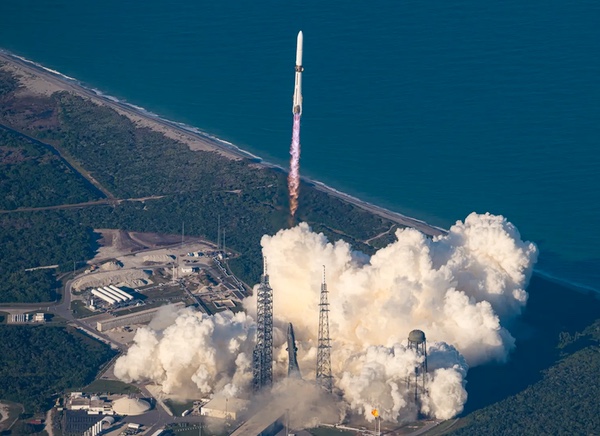
| Without a doubt, SpaceX’s Falcon 9 settled the question of first stage reuse. |
That changed when Henry Yesler took a gamble, brought a saw mill up from San Franscico, and started turning trees into lumber. The mill, first of many, produced the capability that allowed ordinary people and business to build the infrastructure to play out their dreams, which eventually created today’s reality.
In Seattle, Blue Origin recently posted notice for the position of manager for “Reusable Upper Stage Development”. Immediately, speculation set off in the space press and illuminati concerning the on-and-off possibility of the New Glenn second stage becoming reusable. As a few noted, at least the public side of that debate has been raging for quite some time.
Without a doubt, SpaceX’s Falcon 9 settled the question of first stage reuse. In a conservative booster design the one long pole was reusing the first stage. The effort has paid off handsomely: not only for SpaceX with its Starlink infrastructure but for a lot of dreamers trying to make a buck in space effort. SpaceX changed the metric of success. Economic viability ranks with technical excellence.
For rocket systems to be economically viable, the first stage must be reusable. ULA’s Vulcan, while sound technically, will fade into history rather quickly largely due to whomever at ULA won the debate about making the rocket totally expendable. The decision doomed it to mediocrity, wasting the dollars and talent spent to turn it into reality—and failing a basic vision test.
There really was no debate for SLS, a vehicle designed by politicians with the preservation of political pork as the only goal. How it worked or its cost never really came up. SLS has proven to be a debacle from a cost standpoint and, as recent events have shown, an operational one. Of course, goals differ. From the standpoint of preserving the political support to maintain it, it has so far succeeded.
Moving forward, the economics debate has shifted to the second stage. SpaceX had plans (and an interesting video) for a completely reusable F9 but quickly moved to Starship. Bringing Starship to reality has become a harder knot to cut than first stage recovery. SpaceX is slowly seeing the design of the second stage being driven not by payload, but by demands of full stage reuse.
Rocket Lab is at the opposite extreme. Neutron’s reusable first stage is designed around the doctrine of a cheap, light, expendable second stage. The limit with this design might be the size and capability of a second stage that the first can handle.
What will Blue do? The outside-the-box possibility is that the “reusable upper stage” will have little to do with New Glenn or a follow-on New Armstrong. Instead, the concern would be vehicles designed primarily to transport payloads not to low Earth orbit but from low Earth orbit to their destination either elsewhere in earth orbit or beyond. It would be refurbished for reuse outside of the Earth’s gravity well.
Blue Origin’s Blue Ring and yet unnamed fuel transporter stages are hints at this. It is taking a cue from the concept pioneered at least in studies sometime ago by ULA with the reusable Centaur, moving the reuse envelope to space. This allows the company to concentrate on vacuum operation and thrust sizing of conventional rocket engines, as well as use of engines that are designed for long-duration acceleration, and structures that are optimized for space.
Mass (both empty and payload) distribution would be on a more appropriate level based on mission needs then a “one size fits all” approach. Even if there was a capability to land 100 tons on the Moon, the 100 tons of payload to land does not currently exist. That results in a high cost for a lander that requires an enormous refueling effort and infrastructure in LEO and on the ground, as well as being one and done.
If the goal is for a more conventional reuse of the New Glenn second stage, where might Blue go? The effort requires study and understanding of the tradeoffs in cost and time to make the second stage recovery cost effective.
| Treat the second stage as an airplane with drop tanks. The “airplane” part is the engines and avionics. The rest is expendable. |
The bulk of expense and the savings in the stage should be in the engines and electronics. Full stage recovery creates enormous expense in cost and mass diverted from the payload by recovery technologies, all to save easy-to-build and cheaply produced fuel and oxidizer tanks in the quest to satisfy an imaginary need for airplane-like reflight. As Starship illustrates ,this requires an inefficient mix of vacuum and sea-level engines, high mass in thermal protection systems (TPS), aero surfaces, and a heavy cost in first stage capability.
Instead, innovate and use a modern update of the original Atlas. Treat the second stage as an airplane with drop tanks. The “airplane” part is the engines and avionics. The rest is expendable. Blue seems to have picked up on development of large “entry shields” where the NASA Inflatable Decelerator left off—they should press forward.
After establishing the entire stage on a reentry trajectory, dispose of the tank portion. Engines and avionics are protected by the expandable heat shield, using parachutes for an accurate recovery profile. Inspect, put on a new “drop tank,” and refly.
This approach eliminates the need for heavy TPS, aerodynamic surfaces, and fuel to carry this up, down, and make a precise landing. The ground infrastructure to recover, remate, and restack should be far less than powered landing.
This configuration should allow recovery from an expanded range of orbits, including GEO transfer. Confidence in the heat shield would eventually lead to use in aerobraking as a routine function—perhaps elese in the solar system as well.
Over the next 20 years in spaceflight, both crewed and uncrewed, it will be far cheaper and efficient to replenish specialized machines rather than replacing them after one mission. Yet machines, architecture, and capabilities will evolve.
When lunar in situ resource utilization comes into being, it will likely first be fuel and oxidizer. Construction of machines on the Moon is decades and many economic milestones away. Starting small will create infrastructure that can evolve driven by technology and economics.
Yesler’s mill started very small with lumber initially of poor quality, but better than what it was before, which was nothing. Little remains other than historical markers and a great view of the Sound from “Skid Row,” as the area was and is called. Yet Seattle and the booming US West Coast are clearly its legacy. Reusable upper stages might be for space infrastructure what a lumber mill on the Puget was for the US West Coast.
Note: we are now moderating comments. There will be a delay in posting comments and no guarantee that all submitted comments will be posted.