Golden domes, fragile firms: the business risks of AI-enabled space infrastructureby Bharath Gopalaswamy and Daniel Dant
|
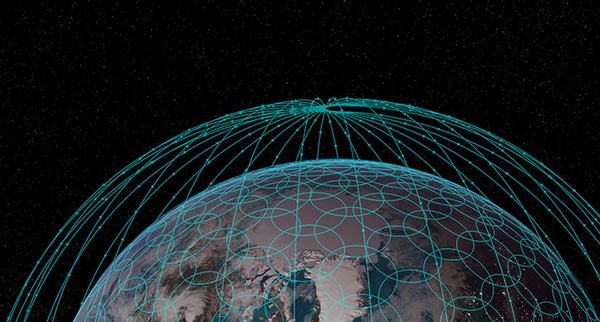
| That tension between strategic dependence and commercial fragility is the core risk we are underestimating. |
Consider the way states now lean on private orbital infrastructure. Satellite broadband constellations backstop national connectivity; commercial imaging and radiofrequency-sensing constellations feed targeting, sanctions enforcement, and disaster response. In practice, these networks behave like utilities or critical infrastructure. In the boardroom, however, they are still treated as “products” in a competitive market: subject to pricing pressure, customer churn, and investor impatience. The result is a growing mismatch between how governments see these systems as quasi sovereign assets and how their owners are forced to run them as growth stage tech businesses.
Artificial intelligence is what turns these constellations into “golden domes.” With hundreds or thousands of spacecraft and millions of users, no human operations team can manage the network in real time. AI plans and replans satellite tasking, routes traffic around outages, allocates scarce bandwidth, detects anomalies, and shapes how the system responds to jamming, spoofing, and cyberattacks. The decisions that matter—which region gets throttled first during congestion, whose traffic is deprioritized when power margins are thin, or how aggressively to respond to suspected interference—are increasingly encoded in models and policies, not in manual checklists.
From a business perspective, AI is a double-edged sword. It is the only way to make these constellations economically viable. Autonomy lowers operating cost, scales customer support, and enables service differentiation. It is the AI “brain” that allows a single network to serve defense, enterprise, and consumer markets concurrently. But the same autonomy creates opaque, path-dependent risks. A model tuned to maximize throughput or minimize latency may create outcomes that, in a crisis, look like political choices: one set of users preserved, another effectively cut off.
This is where the business model collides with geopolitics. Many space operators now straddle incompatible customer portfolios. On one side are defense and national security clients who treat space connectivity and sensing as mission critical and expect near absolute resilience. On the other side are commercial customers who are price sensitive and have alternatives. When capacity is constrained, the operator is forced into triage. Who gets served first: the army division, the hospital network, or the hedge fund? In practice, it is a high-stakes allocation of political favor that can alienate paying customers, anger governments, and damage the brand.
Capital structure makes this worse. These firms are often highly leveraged, asset-intensive businesses operating in a funding environment that has grown far more cautious. Launch and manufacturing costs are still high, insurance premiums are rising, and the revenue side remains exposed to regulatory shifts and customer concentration. One geopolitical shock, sanction regime, or large customer loss can threaten not just the P&L, but the infrastructure that multiple countries quietly assume will be there in a crisis.
| For operators and investors who get ahead of this curve, designing business models and governance that match the strategic reality is not just risk management but a significant competitive advantage. |
Boards and investors are only beginning to catch up with what it means to own and operate a “golden dome.” Traditional dashboards such as average revenue per user (ARPU), churn, and launch cadence do not capture geopolitical exposure, sanctions risk, or the reputational cost of decisions made under fire. Yet these are now board-level variables. When a constellation’s AI-driven routing policy denies service to a contested region, that may satisfy one regulator and enrage another. When a company agrees to prioritize one state’s military traffic, it may invite cyber retaliation from that state’s adversaries.
For operators and investors who get ahead of this curve, designing business models and governance that match the strategic reality is not just risk management but a significant competitive advantage and an opportunity to set the standard for how commercial space supports states in crisis. Here are four main steps the operators and their backer could pursue:
Treat geopolitical and crisis scenarios as core business cases
Operators should be stress-testing their AI policies and network architectures against concrete scenarios: regional conflicts, sanctions on key markets, coordinated jamming campaigns, or sudden surges in humanitarian demand. Those scenarios should be tied to revenue projections, capex plans, and insurance assumptions.
Actively segment products around resilience and control
If a constellation is going to serve both militaries and civilians, its offerings and governance need to reflect that. One tier might come with explicit commitments to human-in-the-loop control, hardened ground infrastructure, on-orbit redundancy, and pre-negotiated crisis playbooks, and be priced accordingly. Another might remain best effort, optimized for cost. Today, many operators blur these categories in search of scale; that may be unsustainable once customers realize that they are sharing a neural “brain” with warfighters.
Bring AI and geopolitics into the boardroom explicitly
Boards need at least one director who can ask informed questions about the interaction between AI-driven operations, customer mix, and geopolitical exposure. What assumptions are embedded in the models about who gets prioritized? How fast can those policies be overridden by humans? Under what conditions would the company shut off or limit service to a region, and who decides? These are material business risks that can trigger lawsuits, sanctions, or loss of key markets.
Recognize political risk as material investment risk
Investors in space infrastructure should recognize that they are buying into political risk as much as technological upside. Once your satellites become the nervous system of someone’s national security or protest movement, you are no longer just a disruptor. You are a strategic actor with a balance sheet that may or may not be able to carry the weight of that responsibility.
The golden dome is already here: AI-enabled space infrastructure sits above borders, quietly allocating bandwidth, imagery, and timing to whomever is connected. The real question now is whether the firms that own these domes, and the investors and governments that rely on them, are willing to redesign their business assumptions around that reality. If they do not, we risk building our future security and economic systems on platforms that are technologically brilliant, geopolitically pivotal, and commercially far more fragile than we care to admit.
Note: we are now moderating comments. There will be a delay in posting comments and no guarantee that all submitted comments will be posted.