The last days of the Persian Catsby Dwayne A. Day and Harry Stranger
|
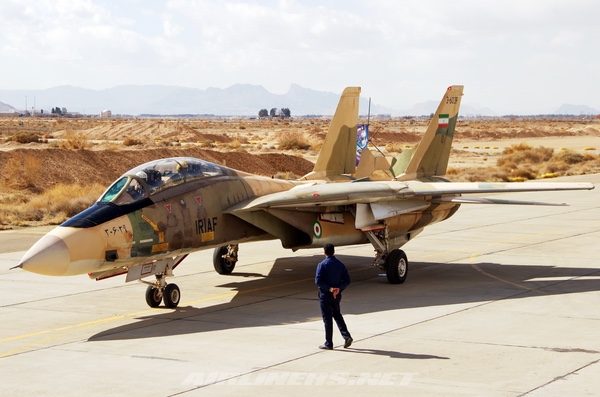
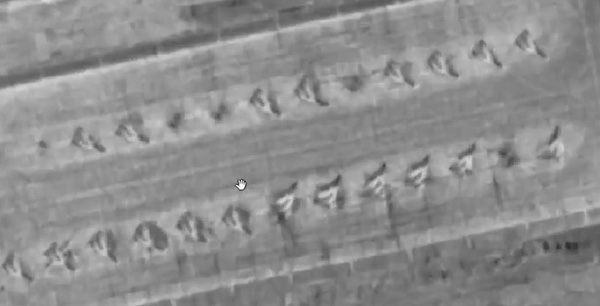 An American HEXAGON reconnaissance satellite photographed twenty-two F-14 Tomcats at Isfahan airbase in 1978 (two not visible in this photo). Iran ultimately took delivery of 79 out of 80 aircraft ordered. Iranian pilots were trained in the United States. (credit: Harry Stranger) |
Fighter diplomacy
The Soviet Union began exporting its formidable interceptor/reconnaissance MiG-25 Foxbat by the early 1970s. This prompted the Imperial Iranian Air Force to seek an advanced fighter that could intercept the Foxbat. In 1972, President Richard Nixon offered Iran the latest in American military technology. The IIAF evaluated the F-14 and the McDonnell Douglas F-15 Eagle. In January 1974, Iran placed an order for 30 F-14s and 424 AIM-54 Phoenix missiles. This order was later increased to a total of 80 Tomcats and 714 Phoenix missiles as well as spare parts and replacement engines for ten years.
| In the 1970s, Iran was a close ally of the United States and was supplied with some of the latest and most sophisticated American weapons, including the cutting-edge F-14 Tomcat. |
Iran already operated American F-4 Phantoms, but the F-14 was a brand new, top-line aircraft, one of the most sophisticated in the world. It had been designed to protect US Navy aircraft carriers from Soviet long-range strike aircraft. The Phoenix was intended to hit Badger and Backfire bombers with their Phoenixes before the bombers could launch their anti-ship missiles. At the same time that the United States agreed to sell them to Iran, the Iranians also ordered several sophisticated air defense destroyers. The destroyers never entered Iranian service but eventually served in the US Navy as the Kidd-class, jokingly referred to by some in the Navy as the “ayatollah-class.”
The first F-14 arrived in Iran in January 1976. More were delivered in following years as the US Navy trained Iranian crews. The aircraft were initially based at Isfahan. Eventually, the United States delivered 79 aircraft to Iran.
On May 4, 1978, an American HEXAGON reconnaissance satellite overflew Iran and photographed the Tomcat base at Isfahan. Twenty-two F-14A Tomcats were visible on that day: 20 of them parked together and two others nearby. Other less-capable American-built combat aircraft were also visible in the satellite photo.
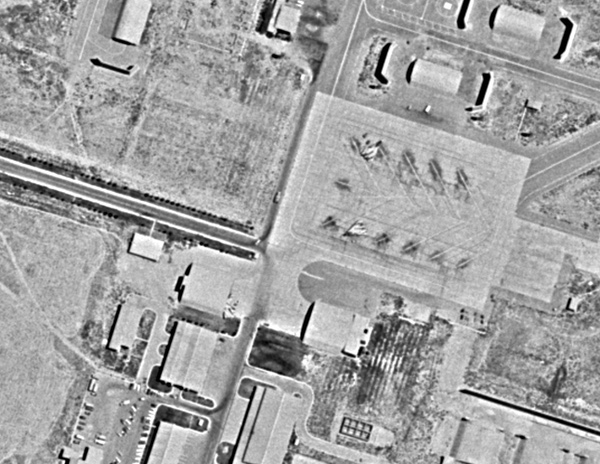 A HEXAGON satellite photographed several Tomcats at the Shiraz airbase in 1980. (credit: Harry Stranger) |
Trial by fire
In 1979, the Shah was overthrown. The air force was renamed the Islamic Republic of Iran Air Force (IRIAF). Many Iranian F-14 pilots were imprisoned or removed from flying out of concern about their loyalty to the new regime. But in 1980 war broke out with Iraq, and the F-14s were pressed into service defending against Iraqi air attacks. In 1980, an Iranian F-14 shot down an Iraqi Mil Mi-25 helicopter for its first air-to-air kill during the Iran-Iraq War. Aviation historian Tom Cooper, who has written several books about Iranian Tomcats, claims that Iranian F-14s scored at least 50 air-to-air victories in the first six months of the war against Iraqi MiG-21s, MiG-23s, and some Su-20s/22s. According to Cooper, during the same period, only one Iranian F-14 suffered damage after being hit by debris from a nearby MiG-21 that exploded. Eventually, the Iranians claimed that the Tomcats destroyed at least 160 Iraqi aircraft (55 confirmed) and suffered 16 losses, including seven to accidents.
Aging cats
The United States closely monitored the Iran-Iraq war using all available intelligence systems. Satellites overflew the area and photographed both sides’ military facilities, including the numbers of aircraft such as the F-14s parked at their bases. The United States military was certainly interested in how many Iranian Tomcats remained operational. The primary photo-reconnaissance satellite used during this time was the KH-11 KENNEN, which returned digital imagery within a short time of taking its photos and could photograph targets nearly daily. But the KENNEN had a relatively small field of view. The HEXAGON, which used film, could photograph much larger areas during each pass over Iran.
| The Iranian maintainers resorted to cannibalizing some aircraft to keep others flying, and managed to purchase parts on the black market. |
In July 1980, a HEXAGON photographed the airbase at Shiraz, where three Tomcats were visible parked outside. In January 1984, a HEXAGON satellite overflew Isfahan again and photographed the base, which by this time had many reinforced aircraft shelters. Eleven F-14 Tomcats were visible parked outside their shelters. Presumably many more were inside.
 A HEXAGON satellite took this photo of the Isfahan airbase in 1984. Numerous Tomcats were spotted outside their hardened shelters. The Tomcat proved highly capable in Iran’s war with Iraq, but its numbers dwindled. American satellites kept track of their numbers. (credit: Harry Stranger) |
In September 1984, the CIA produced a report on the status of Iran’s Air Force. The report’s title was telling: “Frustrations of a Former Power,” concluding that it was a shadow of the force it had been during the Shah’s reign. Only 65 to 80 F-4, F-5, and F-14 fighter aircraft were considered fully operational, compared to more than 400 during the Shah. Iran had started the war with 76 F-14 Tomcats and had lost six in combat by the time of the report. But of the remaining 70, only 10 to 15 were considered operational, split between Isfahan and Shiraz air bases. The CIA noted that in September 1980, the operational readiness rate for the complicated interceptor was only 40%, lower than the simpler F-4s and F-5s. The fighters were supported by a dozen 707 and 747 tanker aircraft.
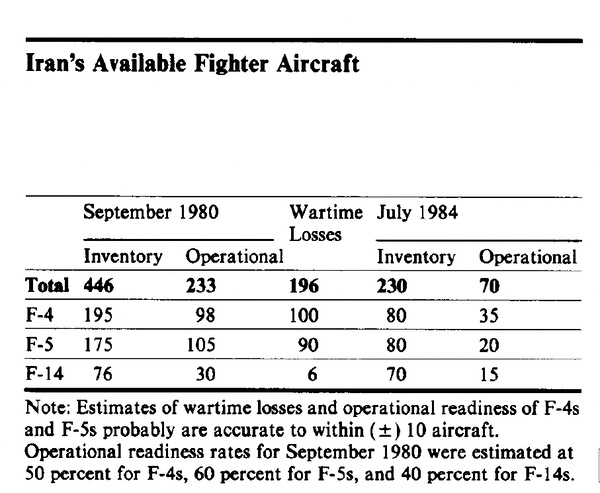 A 1984 CIA report estimated the size of the Iranian air force after several years of war and American sanctions. It was far smaller than it had been before the 1979 revolution. (credit: CIA) |
The report stated, “The clerical regime distrusts the Air Force more than the Army or Navy in part because it was the Shah’s favorite service and because most pilots are well educated, US-trained, and have middle- or upper-class backgrounds. Political leaders control the Air Force by attaching ‘political advisers’ to airbases, by bribing key officers with consumer goods, and by playing on the rivalry between officers and technicians.”
After the war, the Tomcat continued in service in the IRIAF. It remained the most capable aircraft in the Iranian arsenal. When it worked, the Tomcat’s powerful radar enabled it to detect and track aircraft at long range, and guide other aircraft to intercept them. But over time the aircraft suffered maintenance problems as well as corrosion in the humid air of the Persian Gulf, and their numbers dwindled. Because the United States and Iran were adversaries, the United States refused to sell spare parts to support Iranian aircraft. The Iranian maintainers resorted to cannibalizing some aircraft to keep others flying, and managed to purchase parts on the black market.
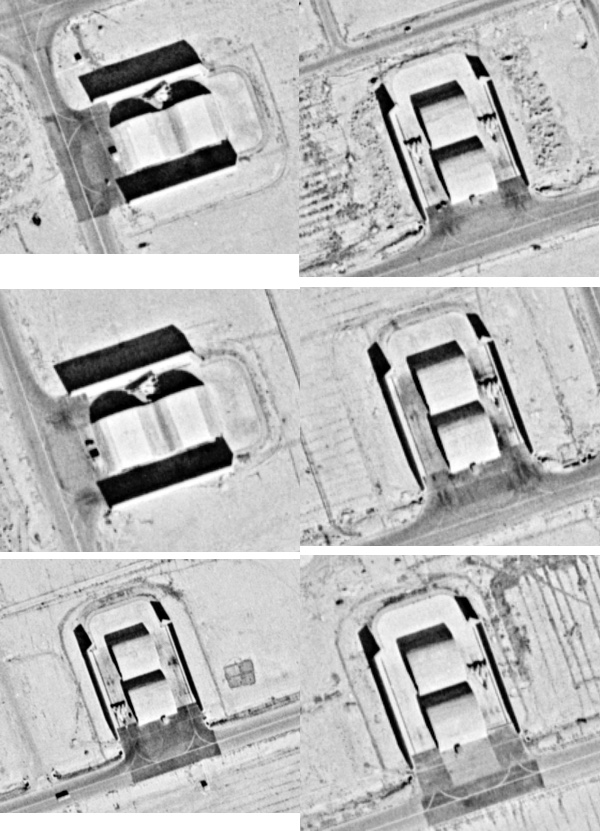 Tomcats outside their shelters at Isfahan in 1984. (credit: Harry Stranger) |
Throughout the 1980s, 1990s, and into the 2000s, the number of operational Iranian F-14s dwindled. Although it was claimed that at times Iran had two to three dozen flyable aircraft, few of these were fully mission capable, and the supply of Phoenix missiles was apparently exhausted by the war. In 2022, Babak Tagvhee wrote a detailed history of Iranian efforts to keep the aircraft flying and the challenges they faced, which included not only time and the elements, but also funding.
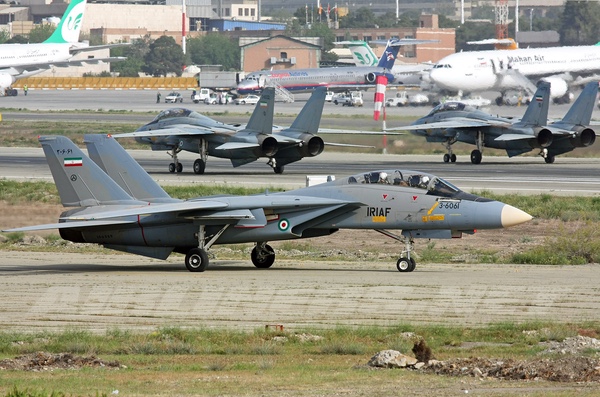 Throughout the 1990s and into the 21st century, there were estimates that Iran had about two dozen flyable F-14 Tomcats, although fewer were fully mission capable. They were kept flying through extensive maintenance, like owning a classic automobile. Iran also sought to upgrade them, but no photos have been released of modified cockpits. (credit: Shahram Sharifi via Wikimedia Commons) |
Last days of the Cat
Grumman, which built the Tomcat, had a long history of building naval aircraft that could withstand the pounding of a carrier landing, earning the nickname “Grumman Ironworks.” The Tomcat was no exception: it was a tough aircraft. But it was also maintenance intensive, and the Navy had not invested in proposed upgrades throughout the 1990s. The US Navy retired the plane in 2006. But the Iranians, without viable alternatives, continued flying them. They kept the remaining Tomcats in the air through extensive maintenance and overhaul work, like keeping a classic automobile running through loving care and constant attention. American satellites continued to photograph Iranian air bases, noting which aircraft moved and which ones stayed in the same location for months or years.
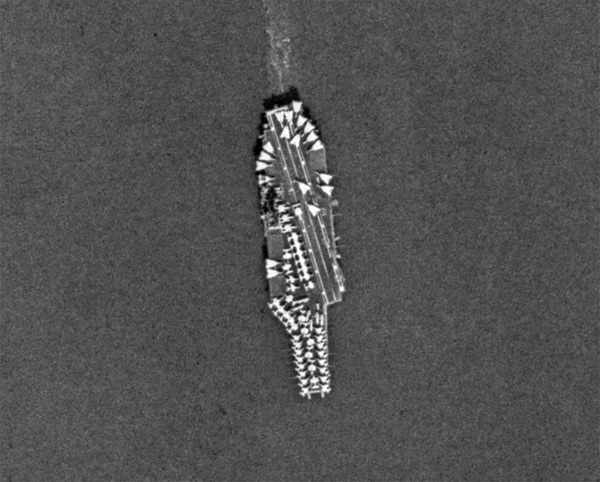 As the US Navy introduced more Tomcats to the fleet in the 1970s it also had to upgrade its aircraft carriers to support them. Here a US Navy aircraft carrier was spotted by a HEXAGON reconnaissance satellite in 1977 with its deck filled with Tomcats. (credit: Harry Stranger) |
On June 16, 2025, the Israel Defense Forces released video footage showing a pair of F-14s were destroyed in air strikes against Iran. On June 21, 2025, the IDF released video footage showing another three F-14s being destroyed by airstrikes. This was prior to the current war against Iran started in February 2026.
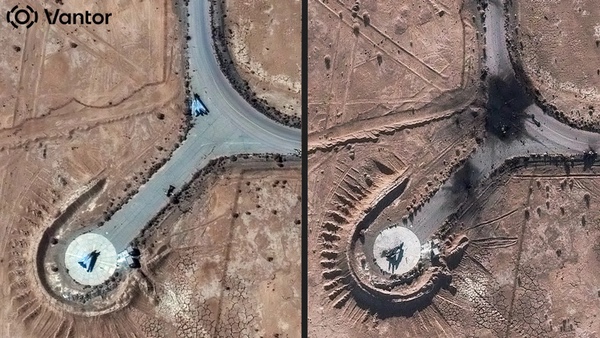 Several F-14 Tomcats were destroyed at Isfahan in March 2026 by Israeli airstrikes. One estimate is that by this time Iran had only ten F-14s left. (credit: Vantor) |
Tom Cooper claimed that prior to the 2026 Iran war the IRIAF had a total of ten operational Tomcats. On March 9, 2026, satellite imagery from Vantor showed at least eight destroyed F-14s in Isfahan as a result of Israeli airstrikes. Cooper claims that some of these aircraft were actually wooden decoys. Isfahan is the same airbase photographed by the HEXAGON satellite in 1978.
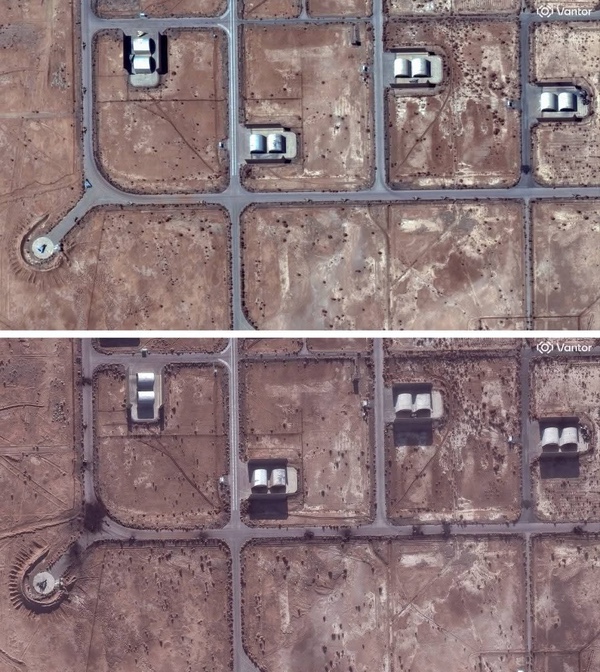 Before and after satellite photos of Isfahan showing F-14s and other aircraft including F-4 Phantoms destroyed in March 2026. (credit: Vantor) |
If there are any Persian Tomcats left, hopefully Maverick can sneak into the country and steal one.
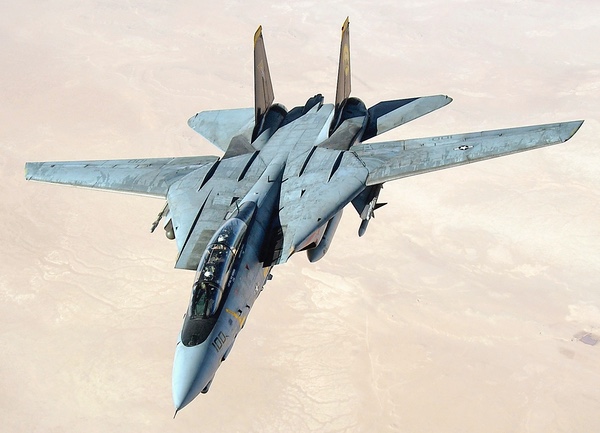 The US Navy operated the Tomcat until 2006. Here an F-14 is seen flying over the Middle East. (credit: US Navy) |
Note: we are now moderating comments. There will be a delay in posting comments and no guarantee that all submitted comments will be posted.