Affordability for Artemisby Robert G. Oler
|
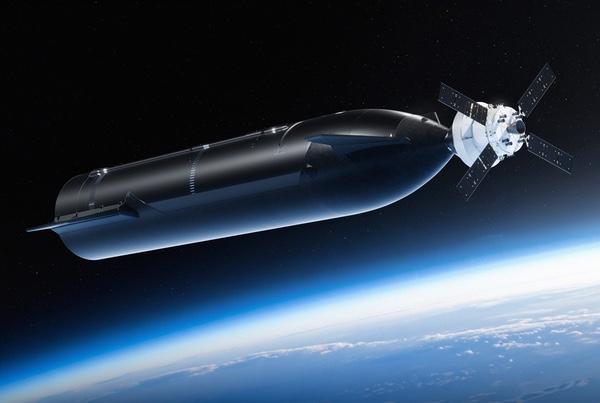
| While NASA administrator Jared Isaacman is on hand for an under-oath explanation to Congress, ask a basic question: what is the bottom line for a landing attempt on Artemis 4 or 5? |
Once the public knows where the program is, and how much federal money it will take to get to wherever it is going, then the issue of where it is going and why should become part of our politics. Where to start?
According to some reports, NASA is looking for $3–5 billion in additional funding for the landing. Where will all the money go? Lander “prototypes” will take some government spending. There is the “spacer” for Artemis 3, parts to buy for the SLS for Artemis 4 and 5. What will the Centaur V, the upper stage being adapted for SLS, cost?
What is the value here? The docking exercise planned for SpaceX seems to be just a notch above docking with a defunct upper stage. It appears Blue Origin is changing the design of its initial lander. How close is Artemis 3 to what would be used on a landing?
While NASA administrator Jared Isaacman is on hand for an under-oath explanation to Congress, ask a basic question. Including redirected Gateway money and what has been spent so far on Artemis 3–5, in total what is the bottom line for a landing attempt on Artemis 4 or 5? Once we have the cost, we can compare it with the value of the entire effort.
How long does the nation fly SLS/Orion? Administration funding plans seem to end SLS at Artemis 5 or maybe 6. Not upgrading SLS means that the system will never reach full performance potential and is essentially admitting the program’s failure. The Centaur V upper stage could allow SLS to continue production, allowing some modest performance upgrades. Within the mold lines of the current rocket, Centaur allows an improved service module to put Orion into a reasonable and usable lunar orbit.
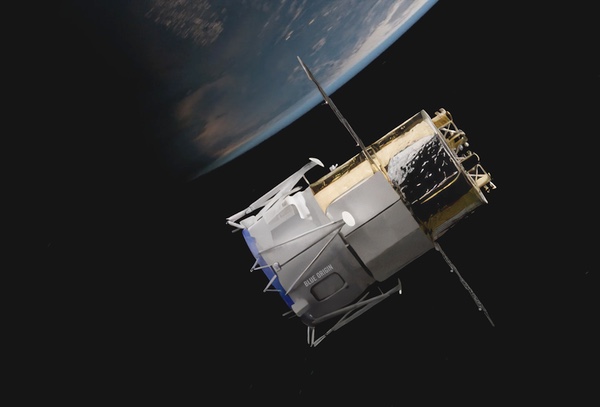 A Blue Moon Mark 2 prototype in Earth orbit for Artemis 3. (credit: Blue Origin) |
The reality? At a cost of $5–7 billion a flight the combination will never be affordable. Affordability is more than a buzz word. It is the measure of value and the key to having a lunar (human) program that survives when the political imperative of today has left.
The initial lunar landings of Apollo died of sticker shock. Its sister Artemis definitely has it in the SLS/Orion combination. Today it appears the plan is to use all available resources to satisfy the current president’s vanity and little else, leaving the next NASA with no tools to operate with.
| Report after report comes out about the lack of oversight of the Starliner program by NASA. Compared to the oversight of both lander programs, the effort at Starliner seems invasive. |
The landers and how they are being acquired is the weakest, and potentially the costliest, part of the program. The landers are fixed-cost in name only. All that is fixed is the initial price to the government. After that? What development cost will each company want to recover? Also, what is the operational cost of each lander and its proprietary infrastructure? People from SpaceX and Blue should be queried on this.
It is a near certainty that a lot of the additional money NASA is requesting will go to one or both landers. The “prototype lander” for Artemis 3 alone increases the cost. That aside, the entire program is tethered to the landers and their delays, with the total program burning cash as the days come off the calendar.
The future of the landers is an enigma inside of a mystery. With either lander no one knows what the nation is committing itself to. Aside from an unknown cost per landing other massive issues exist. How are all these reusable vehicles serviced and maintained in lunar orbit? For how many missions is the lander usable? What will the government’s financial role in lander sustainment be?
Rhetoric aside, what are their capabilities? Who is liable if a government crew is lost on a commercial lander? Who does the investigation? Who pays for the fixes?
Answers are critical to the operation of the system, but the bottom line is the question of short- and long-term cost of the system. If the Starship lander requires 20 tanker flights (depot cost aside) with each flight costing $100 million, or Blue Moon requires three New Glenn launches at $1 billion a copy, the systems are neither affordable nor sustainable.
Both companies have goals and rhetoric, but a reality of failing to meet any semblance of a schedule and frequently embracing calamity. Both companies continue to have full-scale vehicle failures. Neither has at this writing landed anything on the Moon nor outside of the GNSS environment, nor do they have plans for a full-envelope demo before humans try landing the vehicle on the Moon.
This last part is puzzling. Report after report comes out about the lack of oversight of the Starliner program by NASA. Compared to the oversight of both lander programs, the effort at Starliner seems invasive. After Starliner, the lack of a complete uncrewed demo mission for a first-ever lunar landing by both companies is both an unsound planning method and an unsafe method of operation. It is an indictment of the entire effort.
| Returning Americans to the Moon only has value if doing so enables a future in which the nation can routinely and affordably operate humans in an environment it cannot now. |
Seeing the future cost of these programs is staring through a glass darkly. The cost to build and operate the shuttle, SLS, and Orion differed greatly from predictions. Both Blue Origin and SpaceX have demonstrated inability to meet schedules, development costs and timelines, and have unknown internal costs. These herald poorly for the accuracy of launch costs or schedules.
The question of which nation first sent humans to the Moon and returned them safely has been settled for all humanity. Today’s timetable of a lunar return is being driven by the need of vanity camouflaged by an unsubstantiated fear.
Isaacman constantly talks about a race with the Chinese. Really? Americans returning to the Moon after the Chinese initial landing has no penalty to the effort. Everyone knows who accomplished the first landing.
Accomplishment in the current president’s term is not for history or the future of the republic. It is for him and him alone, particularly when it summons no future past his term.
Returning Americans to the Moon only has value if doing so enables a future in which the nation can routinely and affordably operate humans in an environment it cannot now. That is what defines which nation can afford to involve humans in lunar exploration by being there. That accomplishment is independent of any other nation’s timeline or success.
If the lunar landing becomes a second Iran war—poorly planned, badly executed, and disastrous—the next president will have a lot of pieces to pick up as human spaceflight in the US will grind to a halt.
Congress, through its power of oversight and the purse, must add sanity, coherence, and purpose to an expensive effort that has none. Let’s get value for the cost and find affordability.
Note: we are now moderating comments. There will be a delay in posting comments and no guarantee that all submitted comments will be posted.