ISRO’s comeback with the successful launch of EOS-05by Ajey Lele
|
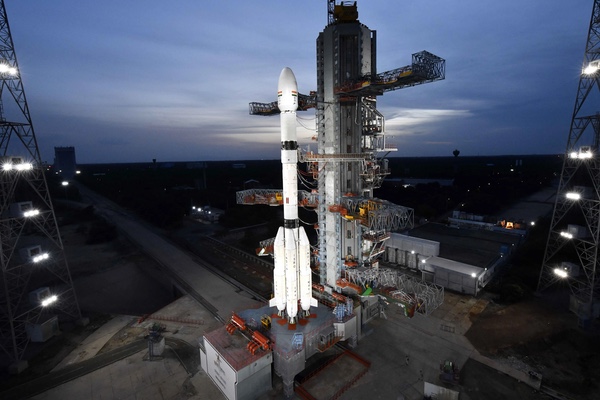
| For India, the orbital launch record in 2026 is a matter of concern. Until July the country had conducted only one launch and that was a failure. SpaceX logged its 100th launch of the year in mid-August. |
Normally, such launches are routine for ISRO. However, this launch was very important since it came after back-to-back failures of the Polar Satellite Launch Vehicle (PSLV). On May 18, 2025, PSLV-C61 failed during a third-stage anomaly while carrying the EOS-09 satellite and on January 12, 2026, PSLV-C62 failed shortly before third-stage separation. The PSLV has for decades been ISRO’s most trusted workhorse launch vehicle with an excellent track record and, obviously, these two successive failures came as a shock for ISRO. In some sense, this setback appears to have shaken ISRO's confidence, and as a result, the agency did not attempt a launch for nearly eight months. The GSLV-F17/EOS-05 mission is only the second launch attempt by ISRO so far this year.
The two failures involved the PSLV, and it is understandable that ISRO would have decided to go back to the drawing board to identify the problems. However, it remains unclear why this led to a broader pause in launches involving other launch vehicles. Since the PSLV failures do not appear to have a direct bearing on GSLV hardware, an organization of ISRO’s stature could arguably have continued with selected non-PSLV launches during the past seven months. A complete organization-wide pause looks unnecessary.
For India, the orbital launch record in 2026 is a matter of concern. Until July the country had conducted only one launch and that was a failure. SpaceX logged its 100th launch of the year in mid-August, while China had carried out 60 orbital launches by late August, including four failures; even war-torn Russia managed ten launches. The number of orbital launches a country or agency conducts reflects their real capabilities, from manufacturing to operational efficiency. In addition, there are major commercial connections associated with it. This is not to argue that launch frequency is a complete measure of India’s space credibility, but a lack of launches leaves a major impact of a country's space program.
The EOS-05 launched last week is a modern-day Earth observation (EO) spacecraft. ISRO’s Earth Observation Satellite (EOS) program contains a dedicated series of advanced remote-sensing satellites. The main focus behind developing this program is having space systems for the purposes of environmental and oceanographic observations as well as disaster monitoring. Most of the satellites in this series could also be viewed to have a shared civilian-military architecture. The following table gives some basic details of various satellites in the EOS series launched so far:
| Name of satellite | Date of Launch | Orbit type | Remarks |
|---|---|---|---|
| EOS-01 | Nov 7, 2020 | LEO | SAR sensor, operational |
| EOS-02 | Aug 07, 2022 | LEO | Part of Microsat series of satellites, mission failed |
| EOS-03 | Aug 12, 2021 | GTO | GEO Imaging Satellite, mission failed |
| EOS-04 | Feb 14, 2022 | SSPO | SAR sensor, operational, also called RISAT-1A |
| EOS-05 | Sep 04, 2026 | Sub-GTO | subsequently to reach geosynchronous orbit |
| EOS-06 | Nov 26, 2022 | SSPO | Oceansat-3, operational |
| EOS-7 | Feb 10, 2023 | LEO, mission life one year | underwent orbital decay in late 2024, had experienced effects of solar storm during May 2024 |
| EOS-08 | Aug 16, 2024 | LEO, mission life one year | Operational |
| EOS-09 | May 18, 2025 | SSPO | Also known as RISAT-1B, SAR sensor; mission failed |
| EOS-N1 | Jan 12, 2026 | LEO | A DRDO product, mission failed* |
* The Defence Research and Development Organisation (DRDO) is the premier research and development agency of the Ministry of Defence. This agency is also involved in developing strategic satellites and during 2019 has successfully demonstrated India’s Anti-Satellite (ASAT) Capabilities (Mission Shakti).
This table indicates that EOS series is not one homogeneous constellation but instead an umbrella covering different generations and types of satellites. This EOS series is mainly composed of LEO based EO satellites, with a smaller number operating from geosynchronous orbits. This may indicate that ISRO’s primary reliance is on LEO for high-resolution and specialized EO purposes and this network is augmented by persistent and wide-area observation capabilities from higher orbits. Different types of sensors put in use in EOS series indicates that ISRO is keen to have a multi-layered EO architecture. SAR sensors are particularly significant from a strategic perspective.
| The fact that it has taken so long for ISRO to replace a strategically important EO satellite raises questions about India’s capacity to rapidly replace critical space assets. |
Unfortunately, four of the EOS missions have failed. Thus, the capability, reliability, and the operational maturity of some EOS series satellites remain unproven. This is not necessarily indicative of shortcomings in the satellites themselves, since some EOS missions have failed because of launch vehicle anomalies. The loss of EOS-09 and EOS-N1 in particular have affected India’s strategic preparedness. Losing these satellites has resulted in delaying the placement of specialized EO capabilities, associated with an expansion of its space-based surveillance architecture.
Against this backdrop the success of EOS-05 is important. According to available information, EOS-05 (GISAT-1A) is designed as a satellite with a combination of multispectral and hyperspectral imaging capabilities. Its payload includes a six-band multispectral visible and near-infrared sensor (VNIR) sensor with a spatial resolution of about 42 meters, a 158-band hyperspectral VNIR sensor with anapproximate resolution of 318–320 meters, and a 256-band hyperspectral Short-wave infrared (SWIR) sensor with about 191-metreer resolution. This satellite is intended to provide frequent, near-real-time imaging over large areas.
EOS-05 has potential security and surveillance applications. This GEO-based EO spacecraft can provide very frequent observation of a fixed geographical region and would complement ISRO’s LEO/SAR constellation. However, there is a need for more satellites like EOS-05 for developing a resilient GEO surveillance architecture. It is also important to emphasize that the EOS series has significant civilian and developmental applications. This combination of LEO and GEO capabilities would assist in resource mapping, weather forecasting and other societal applications too.
The successful launch of EOS-05 was necessary for ISRO’s morale. However, this satellite is a replacement of EOS-03/GISAT-1, which was lost in a launch failure in 2021. It took five years for ISRO to replace this satellite. The fact that it has taken so long for ISRO to replace a strategically important EO satellite raises questions about India’s capacity to rapidly replace critical space assets. In the future, a greater emphasis is needed on resilience, redundancy, and faster satellite replacement so that the loss of a single mission does not create a multi-year capability gap.
Note: we are now moderating comments. There will be a delay in posting comments and no guarantee that all submitted comments will be posted.