US space dominance: big changes are aheadby Katie Inman, Peter Baumgaertner, Edward J. Rojas, Shiva Goel, Paul Stimers, David M. Ehrlich, and Elizabeth C. Perry
|
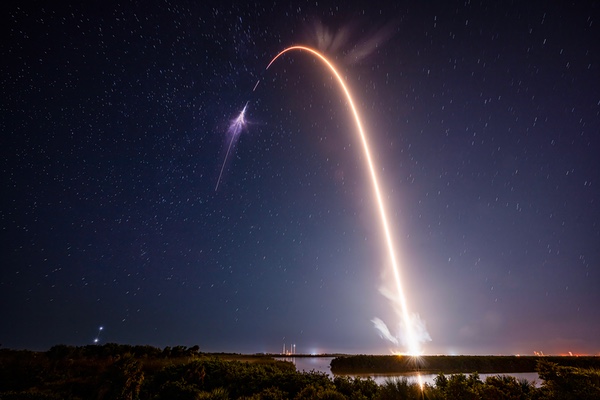
| In broad terms, the space transportation policy and RFI will have the result of commercializing space launches and space industry activity more than ever. |
The policy, RFI and OSC request for expressions of interest are all actions that align with other recent statements and actions from the federal government concerning the growth of the commercial space industry. The FAA published a notice of proposed rulemaking on July 30, proposing to waive the applicability of several statutes for spaceport licenses and launch or reentry licenses. The statutes that the government would waive generally involve environmental standards. Similarly, in August 2025, President Trump issued an executive order (EO), “Enabling Competition in the Space Industry,” that directed agencies to remove regulatory barriers and take specific actions to achieve an increased cadence of commercial space launches.
Spaceport infrastructure
The National Policy strongly emphasizes the need for improvements to existing space launch infrastructure and development of new sites. The memorandum, which places “Space Launch and Reentry Infrastructure” at the top of the space transportation policy, directs the Secretary of Transportation to coordinate with other heads of agencies to identify, within 180 days of the date of the memorandum, “potential locations for additional launch facilities and targeted development or improvement of launch infrastructure.” The National Policy directs both the Secretary of Defense and NASA Administrator to operate federal launch and reentry ranges and facilities in a manner that accommodates government and non-government users by, among other things, expediting facility permitting and environmental reviews and providing for flexibility and innovative solutions with regard to financing of infrastructure.
The policy’s emphasis on infrastructure is consistent with the FAA’s RFI, which is primarily focused on improving or developing spaceport infrastructure. Four of the five categories of specific questions and solicitations for feedback in the RFI address the challenges and needs for robust infrastructure. The RFI refers to the FAA’s Spaceport Licensing Primer: An Introduction to the Spaceport Licensing Process and recognizes that a critical component of ensuring the development of spaceports is funding.
Spaceport locations
In acknowledging that lags in infrastructure development are a primary source of concern, the RFI seeks input on additional locations that might be suitable for spaceport development. The RFI seeks specific input on potential locations for new spaceports. New locations would complement or augment many of the operations from Cape Canaveral Space Force Station, Kennedy Space Center, Vandenberg Space Force Base, and NASA’s Wallops Flight Facility. This suggestion of relocating certain potential launches to new sites is not surprising, given the June 22, 2026, NASA Office of Inspector General report, which found that NASA’s launch infrastructure is dated and generally lacks capacity to fulfill the demands of NASA, other government agencies and commercial stakeholders, as the demand for launches continues to grow.2
The RFI seeks input not only on new sites but on existing sites and sites that the FAA had previously considered for issuance of an appropriate spaceport license. The RFI asks whether the federal government can take certain actions to increase orbital launches from existing spaceports and why underutilized spaceports have not yet been developed sufficiently. The RFI also indicates the agency is inclined to reconsider its assessment of Spaceport Shiloh in Florida, Camden Spaceport in Georgia, Puerto Rico Spaceport and space launch rig sites, which are sites on converted oil rigs or custom-developed launch platforms.
| Perhaps the most notable aspect of the spaceports bond financing provision is its breadth, as compared to bond financing for airports. |
As for criteria that apply to new sites, the RFI seeks input on prioritizing certain geographic criteria, asking whether proximity to the Equator, separation from densely populated areas, or other criteria should prevail in considerations. The RFI further seeks input on considerations concerning logistics and the potential for spaceport island sites. The RFI acknowledges the safety criterion of 0.0001 casualties per operation and appears to seek input on how an applicant for a new spaceport can fulfill this primary safety criterion.
In addition, the RFI seeks input on development of new vertical spaceport sites and ideas on how it can encourage, facilitate and promote such development. It asks for ideas on actions the DOT can take to address “four challenging areas” concerning spaceport development: “(1) stakeholder engagement, (2) co-location with an airport, (3) environmental issues, and (4) airspace integration.” The RFI seeks ideas specific to steps concerning expedited construction and supply chain constraints.
In sum, the RFI is consistent with the space transportation policy, which orders the Secretary of Transportation to identify new spaceport sites within 180 days and directs the Secretary of Defense and NASA Administrator to consult with other agency heads such as the Secretary of Commerce, support the US space transportation industrial base, maximize buying power and cost efficiencies, and, within 90 days, identify federal lands that might be suitable as reentry sites.
Costs of spaceport infrastructure
The space transportation policy directs agencies to incentivize co-development of space transportation infrastructure with private sector partners, expedite permitting and environmental reviews, develop fair and transparent cost recovery policies for common space services and infrastructure, and develop range scheduling criteria and publish range schedules to maximize allocation of launch resources.
The RFI observes this direction by requesting specific information concerning the costs of spaceport development. The RFI asks, in part:
- What are the primary costs associated with developing a new spaceport?
- What strategies and technologies could be utilized to expedite construction?
- What are the supply chain constraints for construction, and how could they be addressed?
- What funding constraints exist, and how could they be addressed, including alternative financing structures? How could public-private partnerships best be leveraged to finance spaceport development?
In observing the challenges presented by the significant costs of spaceport development, the RFI explicitly acknowledges that funding is a critical aspect of spaceport development. In furtherance of resolving concerns regarding funding, the National Policy directs the heads of relevant executive departments and agencies to consult with state, local, tribal, territorial, and industry partners and develop fair and transparent cost recovery policies for common services, commodities and infrastructure.
Bond financing for spaceport infrastructure
As noted in a Holland & Knight webinar and prior publications featuring Holland & Knight commentary, the One Big Beautiful Bill Act added an “exempt facility” designation for spaceport bonds. Adding spaceport bonds as a qualified exempt facility bond will likely reshape financing and development opportunities in the commercial space sector because it expands access to tax-exempt bond financing for a broad range of spaceport-related facilities. The provision also creates flexibility for public-private partnerships, manufacturing and infrastructure projects.
Perhaps the most notable aspect of the spaceports bond financing provision is its breadth, as compared to bond financing for airports. Similar to airports, spaceport bonds are not subject to the volume cap limitations, and spaceport bonds may finance specific facilities that may be unavailable for conventional airport bond financing. For example, a spaceport proprietor or owner may finance manufacturing facilities or industrial parks. Unlike airports, however, spaceports can have facilities that are used by a single commercial entity that are otherwise limited in exempt facility airport financings.
In addition, spaceport property located on land leased by a government unit from the US is not disqualified from being treated as governmentally owned if the lease and any subleases meet certain statutory requirements, including an irrevocable election by the lessee (the developer) not to claim depreciation or an investment credit with respect to such property. Moreover, spaceport bonds are not treated as federally guaranteed merely because the US (or any agency or instrumentality thereof) pays rent, user fees, or other charges in exchange for use of the spaceport.
Public-private partnership opportunities and arrangements
To meet the goal of supporting more than 1,000 launches and reentries every year by 2030, the RFI states the government must add and modernize launch and reentry infrastructure. Part of the solution for meeting the challenge, it states, lies with incentivizing co-development of infrastructure, including by facilitating leases, commercial development and public-private partnerships for capital improvements on federal property. The space transportation policy directs heads of executive departments and agencies to consult with state, local, tribal, territorial, and industrial partners and routinely consider and evaluate opportunities to improve launch and reentry access to infrastructure.
| In addition to addressing the immediate need for infrastructure improvements and development, the space transportation policy clearly prioritizes growth of the commercial space industry. |
A public-private partnership is a contractual arrangement between a public sector entity (such as Space Florida), a county industrial development agency, or a state industrial development agency and a private enterprise for the long-term management of infrastructure. As applied to spaceport infrastructure, a public-private partnership arrangement could provide for spaceport infrastructure and related facilities. Public-private partnership arrangements are particularly valuable in highly technical fields such as aerospace and space exploration because:
- Private sector expertise. Engineering firms and developers in transportation and aerospace have specialized expertise to implement the design, building, construction, financing, management, and operation of complex facilities such as spaceports.
- Government resource constraints. Governments typically lack both the budget and the personnel to manage specialized facilities such as spaceport infrastructure.
- Combining capabilities. By outsourcing to the private sector, public-private partnership arrangements combine government authority with private expertise to facilitate the use of qualified private activity bonds and create positive infrastructure outcomes.
A typical public-private partnership structure consists of the following:
- Public sector entity. Serves as the conduit for the private sector, thereby providing public benefits and acting as the issuer for tax-exempt bonds
- Private enterprise. Takes the lead on design, construction, financing, management and operation of facilities
- Tax-exempt bonds. Issued through the public sector conduit; proceeds are used by the private sector to build improvements
Given the highly technical nature of aerospace, public-private partnerships will be useful avenues for making spaceport projects a reality by combining public-sector authority and sponsorships with private-sector technical expertise and capital.
Consistent with this framework and the long-standing benefits of such arrangements, the RFI states, “[p]ublic-private partnerships could be a valuable and innovative tool for structuring spaceport development.” The RFI further references the DOT’s newly established National Infrastructure Development Office, which is focused on expanding and promoting the use of public-private partnerships in infrastructure development.
Entry into the marketplace
In addition to addressing the immediate need for infrastructure improvements and development, the space transportation policy clearly prioritizes growth of the commercial space industry by facilitating new entrants’ efforts to engage with or enter the commercial space industry. The policy directs agencies to facilitate access to federal launch and reentry sites for commercial users by providing opportunities, such as engaging in international markets, while simultaneously protecting national security and keeping US technology competitive.
The space transportation policy addresses the space transportation industrial base strategy by requiring, within 180 days, the Assistant to the President for Science and Technology to work with relevant agencies to create a strategy that keeps the US space industry competitive by:
- Ensuring the US maintains leadership and superiority in space transportation
- Improving US space transportation by making it more capable, affordable, secure and resilient for government and private users
- Developing the workforce by supporting training programs, helping military personnel transition to civilian space jobs and creating pathways to attract talent
The space transportation policy further requires achieving certain steps to ensure market access for space transportation stakeholders. Within 120 days and every two years after that, the Secretary of State and Secretary of Commerce must update policies to promote US space capabilities internationally through export policies, protecting intellectual property, advocating for US industry abroad and developing foreign partnerships. Moreover, the policy directs appropriate agencies to update export controls to enable US companies to sell space-related technology to friendly nations.
The requirement for a national strategy concerning US superiority in the space transportation industry is consistent with Section 6 of the policy, which requires heads of relevant agencies to ensure that US government payloads are launched by or transported in space on vehicles manufactured in the United States, subject to distinct exceptions. The focus on US-manufactured products and vehicles is consistent with many other recent actions of the administration, which has concluded that foreign-produced unmanned aircraft systems and other devices pose a national security threat. Required changes to the industrial base for other notable industries is currently resulting in creativity and increased awareness of U.S. companies that design, produce and market products in the US.
FCC spectrum availability
The Launch Communications Act of 2024 and the FCC’s swift implementation of its provisions have streamlined licensing and expanded frequency ranges available for commercial launch and reentry operations. Nevertheless, launch and reentry frequency bands remain heavily coordinated with other users, raising questions about the sufficiency of the current regime in a future with many more launches occurring at a much more rapid cadence from more locations and with greater radio frequency (RF) performance needs. The space transportation policy thus tasks the Commerce Department and FCC to “ensure reliable access to spectrum for commercial and Federal space launch, reentry, recovery, and on-orbit activities” in coordination with other impacted agencies.
On August 25, the FCC released a public notice broadly seeking comment on the commercial aspects to the directive, including actions the FCC can take to support growth in launch capabilities in the short term (within two years), medium term (within five years) and long term. The FCC seeks input on current and future spectrum requirements, the need and suitability of additional frequency bands and priority allocations, improvements to existing coordination processes, and spectrum support for uncrewed surface vessels and uncrewed aircraft systems (UAS) that interface with launch activities.
The FCC’s action comes on the heels of its recent overhaul of space and earth station licensing rules, demonstrating a broad commitment to facilitate growth in the US commercial space industry.
Space travel corridors
In addition to its heavy emphasis on spaceport infrastructure development, both the space transportation policy and RFI address questions concerning prioritization of space operations in airspace. In response to the policy’s direction to the DOT to “designate priority airspace for critical space launch corridors,” the RFI seeks input from the space and aviation industries and other interested stakeholders. In particular, the RFI solicits input on considerations for developing priority airspace for critical space launch corridors, the ideal requisites for priority airspace, and concepts for differentiating standard airspace used for commercial space activities from priority airspace.
| Designation of priority airspace based on launch needs or plans could result in changes to the longstanding means of airspace management. |
Potential designation of priority airspace is a significant topic for all aviation and space stakeholders. As indicated in many comments concerning operations of unmanned aircraft systems and potential reconsideration of the general rule that UAS operators must yield to manned aircraft, the aviation operator community will likely express concern about revisiting the long-standing framework of rights of way.
As a matter of principle, the FAA generally declines to designate certain priorities for certain types of operations; rather, the agency safely manages the most complex airspace in the world by ensuring operators comply with requirements that are based on the class of airspace in which an operator enters or operates. The FAA further manages airspace by overseeing and administering the well-known Notice to Air Missions system, in which operators obtain necessary information concerning potential risks or changes in the area in which they intend to operate.
Designation of priority airspace based on launch needs or plans could result in changes to the longstanding means of airspace management. Moreover, given the current effort to modernize the national airspace system and critical tools the FAA uses to manage the airspace, introducing the concept of prioritization or corridors for space launches or operations could introduce complexity. Stakeholders should monitor the public comments and consider expressing ideas or concerns in response to the RFI.
Novel in-space activities
In addition to the space transportation policy and RFI, the OSC simultaneously published a Federal Register notice inviting interested operators to submit expressions of interest by October 5, 2026, to participate in a pilot of the proposed Space Commerce Certification program. this is designed to coordinate federal review of commercial space activities that generally fall outside existing regulatory frameworks.
The goal of the pilot program is to provide a consolidated review process for novel space missions. The notice implements Section 5 of EO 14335, “Enabling Competition in the Commercial Space Industry,” in which President Trump directed completion of several steps focused on removal of regulatory barriers or process updates to promote growth of the commercial space industry. Under the pilot program, the process for obtaining certification will involve a single-application, coordinated interagency review process. The FAA, FCC, and OSC’s Commercial Remote Sensing Regulatory Affairs office will remain responsible for their areas of airspace safety, communication, and licensing of private Earth remote-sensing satellite systems. Applicants may still need to obtain separate legal authorizations from these agencies, as applicable. During the pilot program, OSC expects to coordinate with the FAA, FCC, Defense and State Departments, NASA, and other relevant agencies.
The required information includes evidence of US entity ownership or operation, a clear mission concept, anticipated timeline for launch or deployment, and other detailed information. Expressions for interest should also contain a statement “confirming the submitter’s commitment to working with OSC, in a manner as transparent to the public as possible, to develop best practices consistent with U.S. Government interests applicable to their intended operations.” The streamlined process for interagency review will not only benefit applicants that meet the criteria but also provide an avenue for applicants to potentially influence the process or assist OSC with making improvements that lead to increased efficiency.
Next steps
Stakeholders should review the space transportation policy, RFI, and OSC request for expressions of interest and determine whether submission of any feedback or applications would be worthwhile for their goals. The policy’s clear emphasis on the federal government’s plans to facilitate rapid growth of the US space transportation industry likely indicates a willingness to fund infrastructure development, remove regulatory barriers, and ensure efficient processes exist that enable increased launch cadence. In addition, stakeholders should remain mindful that, given the upcoming FAA reauthorization discussions that will soon occur in Congress, opportunities may arise for congressional engagement that will further stakeholders’ achievement of goals regarding space transportation and development.
Note: we are now moderating comments. There will be a delay in posting comments and no guarantee that all submitted comments will be posted.